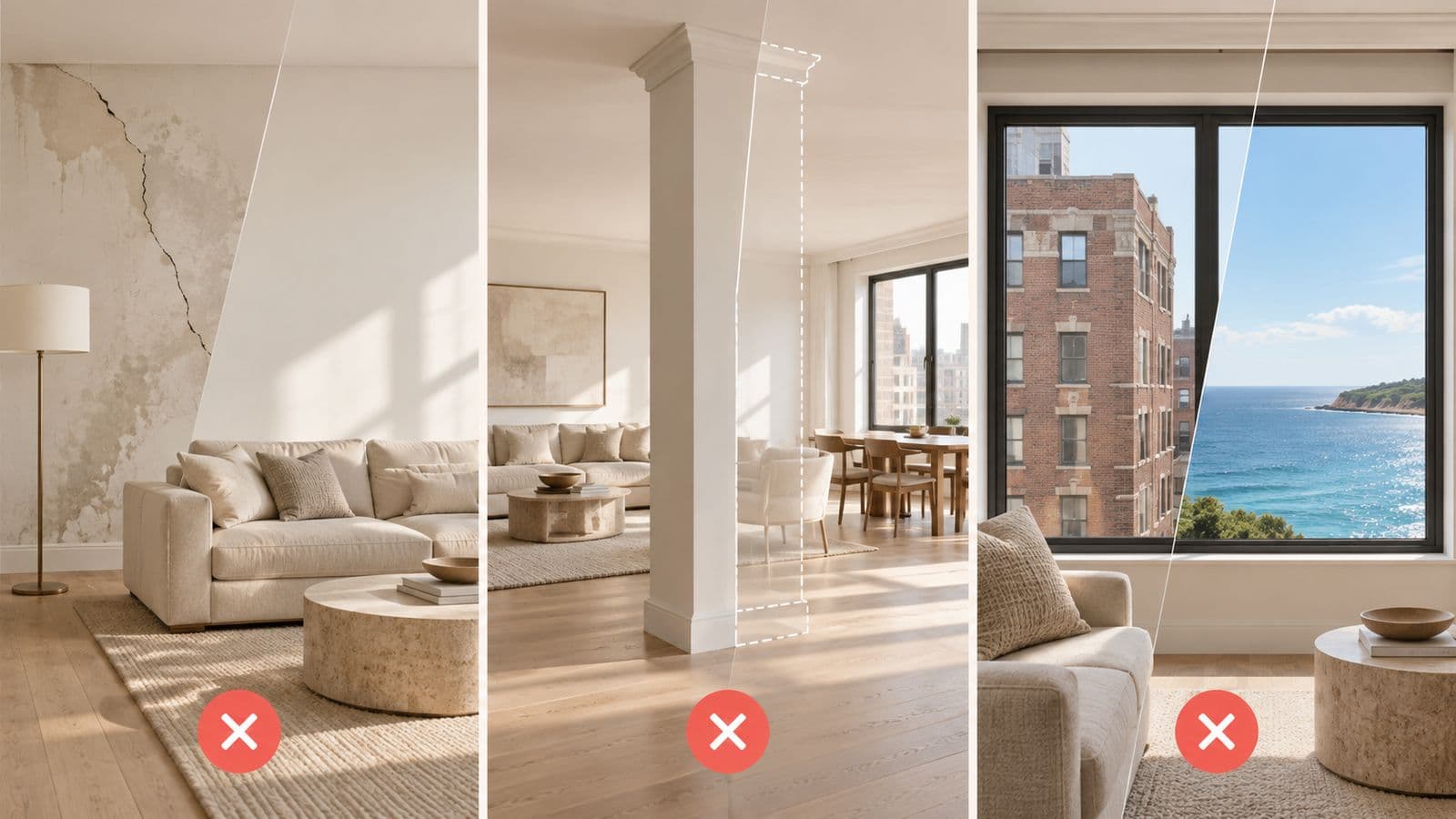
What is California AB 723?
AB 723 is a California law that took effect January 1, 2026. It requires real estate licensees to disclose when listing photos have been digitally altered — including virtual staging — and to make the original, unaltered image available. In short: if you edit it, you have to say so, and show the real version.
What it means in practice
A compliant California listing with virtually staged photos needs:
1. A written disclosure that the image has been digitally altered. 2. The original unaltered image made available — it must appear immediately before or after the edited version. 3. Clear labeling so a buyer can tell which photos were edited.
The law targets edits that change how the property is represented — virtual staging, AI room redesigns, digitally removing items, enhancing the exterior. Standard photo corrections like white balance and exposure are not covered. Willful non-disclosure is a misdemeanor in California.
This is stricter than the "just add a watermark" standard some states rely on. California is requiring the before and after, not just a note.

The simple way to comply
You don't need to overthink this. If you list in California:
- Label every virtually staged image "Virtually Staged."
- Include the original empty photo of each staged room in the listing, right next to the staged one.
- Disclose in the listing remarks that some photos are digitally altered.
- Keep the originals on file.
Do that and you satisfy both AB 723's apparent intent and the general MLS/NAR standard at the same time.
Why this is actually good for you
A "show the before and after" rule sounds like friction. It isn't — it rewards staging that has nothing to hide.
If your staged photo only added furniture to the real room, the empty original sitting next to it proves you didn't fake anything. The before-and-after becomes a trust signal.
The agents who'll struggle with AB 723 are the ones whose tools quietly changed the property — added a fireplace, brightened a dim room into a different room. Put those side by side with the original and the gap is obvious. Staging that only furnishes the real space has nothing to hide.
FAQ
When does California AB 723 take effect?
It took effect January 1, 2026.
Does AB 723 ban virtual staging in California?
No. It requires disclosure of digitally altered photos and access to the original image. Virtual staging that's disclosed and doesn't misrepresent the property remains allowed.
Do I have to show the original photo next to the staged one?
Yes. Under AB 723, the unaltered image must appear immediately before or after the edited one.
What if I only added furniture?
Then the before-and-after actually helps you — it shows buyers you furnished the real room without changing the property.
Staging built for the before-and-after era
VirtuallyStage furnishes the actual room and keeps your original photo intact, so showing the before and after is effortless — and straight.
$35 for 5 photos, no subscription.
Information, not legal advice — confirm specifics with your broker. Last updated: July 14, 2026.
Sources
- California AB 723 — Real estate: digitally altered images: disclosure (2025–2026 session), official bill text