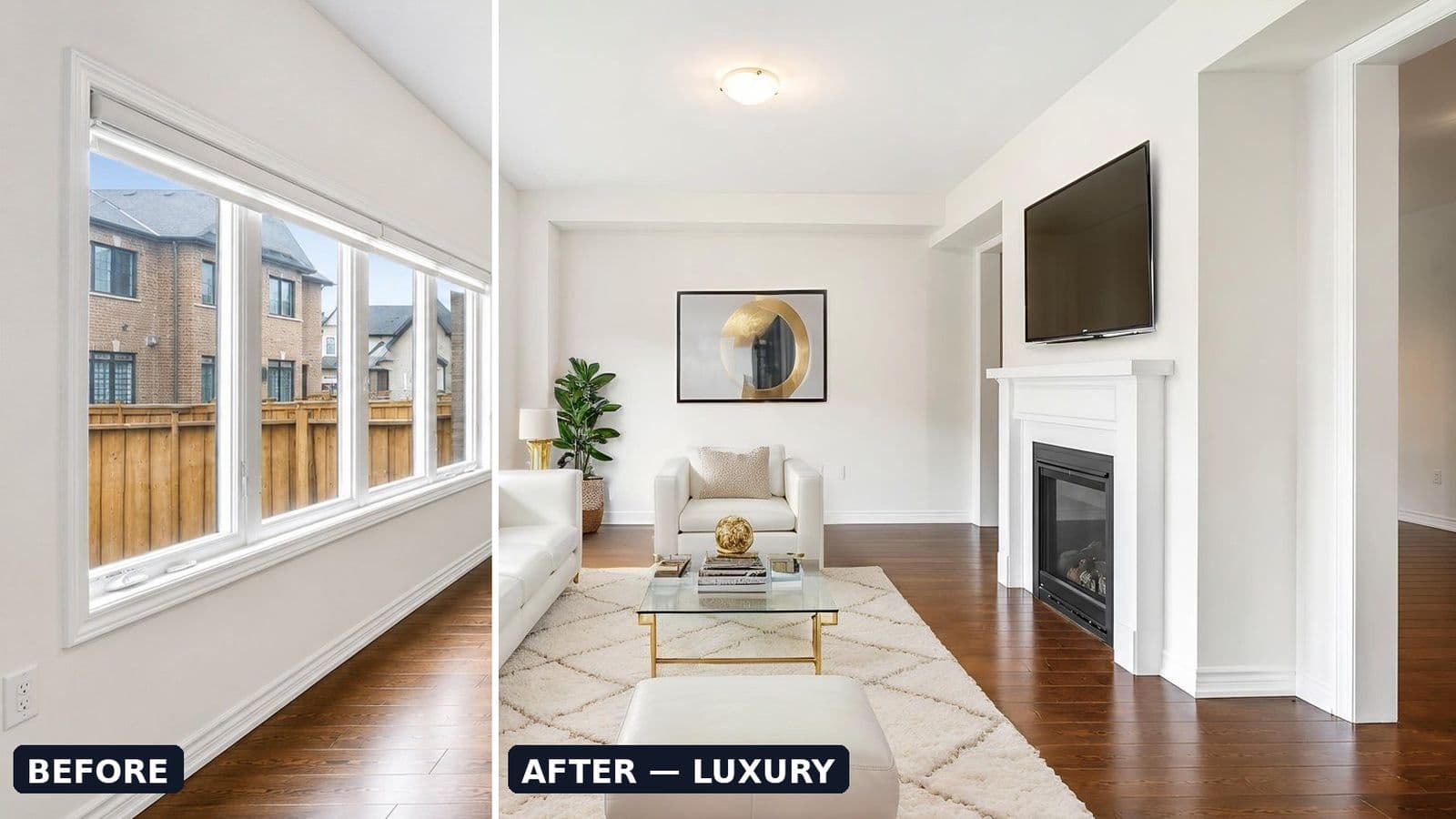
Written by a working real estate agent. I approve or reject every staged image before it goes on one of my listings — this is the checklist I use.
Bad staging doesn't just look bad — it costs you the buyer
When a buyer spots fake-looking furniture, they don't think "bad photo." They think "what else in this listing is misleading?" Bad virtual staging poisons trust in the price, the room sizes, and you. Good virtual staging is invisible — buyers just see a home they want to walk through.
Here are the five giveaways buyers (and other agents) notice first, in order.
1. Furniture scale that lies about the room
The number one giveaway. A king bed fitting comfortably in a 10×10 bedroom. A massive sectional in a compact condo living room. Buyers measure rooms against furniture they own — when the scale is off, they feel the room size is being misrepresented, and that's exactly the kind of edit that draws complaints.
The check: ask yourself if the furniture shown would physically fit through the door and sit in that room with walking space. If you wouldn't stage it that way physically, reject the render.
2. Shadows pointing the wrong way
Real rooms have one dominant light source. Cheap AI staging drops in furniture with shadows that contradict the window light — or no shadows at all, so the sofa floats. Eyes catch this even when people can't name it; the image just feels "off."
The check: find the window in the photo. Every shadow should fall away from it.
3. Floating and clipping furniture
Legs that don't quite touch the floor. A rug that slides under a wall. A lamp with no cord in the middle of a room. These are render errors, and publishing one tells every agent in your market that you didn't look at your own listing photos.
The check: zoom in on every contact point — feet on floor, art on wall, rug edges.
4. Style that fights the house
Ultra-modern glass furniture in a century home. Farmhouse decor in a downtown high-rise. Buyers shopping that property type feel the mismatch instantly. Staging should answer the buyer's real question — "could I live here?" — in the style that buyer actually wants.
The check: stage for the buyer the home will attract, not the style you personally like. This is why generating multiple style variations of the same room matters: you pick the one that fits, instead of forcing one style on every listing. (The same living room in all 8 styles shows how far the styles are apart.)
5. The too-perfect glossy look
Cartoonish textures, plastic-looking fabric, lighting that belongs in a video game. Renders like this read as advertising, not as a room. If the image looks like a 3D render at first glance, it failed.
The 30-second pre-MLS checklist
- Would this furniture physically fit, with walking space?
- Do shadows match the window light?
- Is every contact point clean — floor, walls, rug?
- Does the style match the buyer this home will attract?
- Does it read as a photo, not a render?
- Is it labeled "Virtually Staged" with disclosure in the remarks? (See our disclosure wording guide.)
If a render fails any line, regenerate it — with modern AI staging that costs seconds, not days. See what passing renders look like, or test it on your own listing photo.
Stage your next listing today
$35 for 8 photos — a full listing — with up to 20 versions of every photo and furniture removal on the same account. No subscription, and credits never expire.