Virtual staging disclosure rules by state — the short answer
Board rules read from each board's own page on September 19 and 23, 2026 · page updated September 23, 2026.
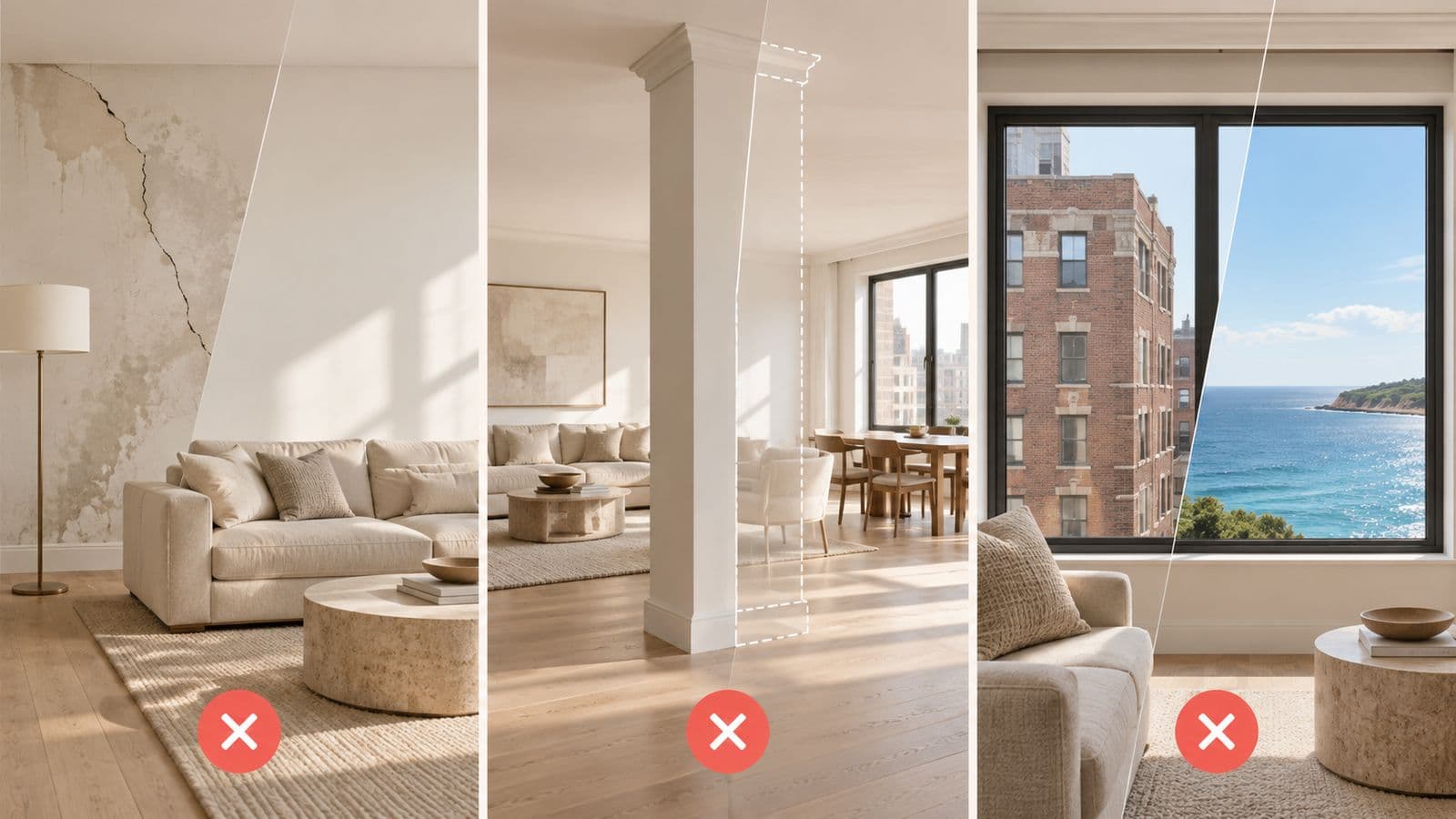
Only one US state has a law written specifically about virtual staging: California (AB 723, in force since January 1, 2026). In every other state, the rules come from your local MLS and from NAR's Code of Ethics, Article 12 — and they all add up to the same two things: label the photo as virtually staged, and never stage in a way that hides a defect or changes the property.
The state-by-state table is directly below. If you only read one line: disclose where your MLS asks (photo description, remarks, a listing field, or on the image), keep the original, and never change the house.
Beyond that, the specifics vary by MLS and by state. Here's the plain-English version.
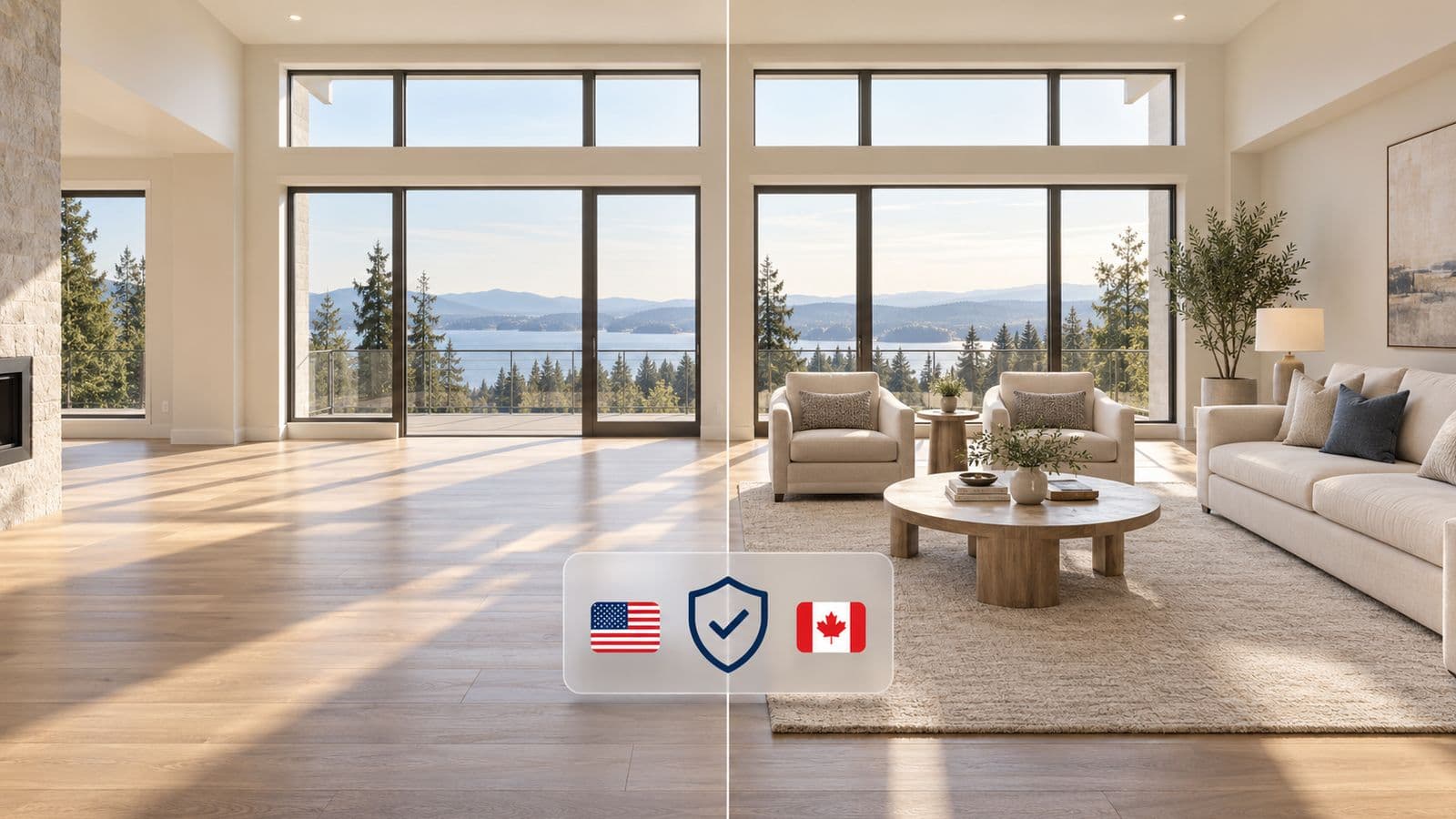
This page covers the United States. Listing in Canada? The rules are genuinely different — two provinces require disclosure in the public remarks, one prescribes exact wording, and Ontario requires none at all. See the Canadian answers.
The disclosure rules by state
Most states rely on their local MLS rules plus the NAR "true picture" standard. A few have specific statutes. Here's the landscape as of 2026 — the board-by-board rules, quoted from each board's own page, are in virtual staging MLS rules by board:
| State / market | What's required | Notes |
|---|---|---|
| California | Strict — a conspicuous disclosure on or next to every digitally altered image, plus a link, URL or QR code to the original unaltered photo | AB 723 (Bus. & Prof. Code § 10140.8), in force since Jan 1, 2026. Applies to the listing agent's own advertising. The only state statute in the US that names virtual staging. On top of it, CRMLS Rule 11.5.2 (also from Jan 1, 2026) requires the original unaltered photo in the listing, immediately before or after the staged one, and a "virtually staged" label in the photo description. |
| New York | No state statute. Downstate (OneKey MLS): no staging rule — images must "accurately reflect" the property (Rule 307). Upstate (NYSAMLSs, incl. Buffalo): a "Virtually Staged" text overlay on the photo + the original directly before it | The state issued a consumer alert on AI-altered listing photos in Nov 2025, not a rule. The upstate rule took effect Sep 1, 2026; caption or remarks alone is not acceptable there. |
| Texas | No state statute. HAR (Houston): "virtually staged" in the Photo Description. NTREIS (DFW): no staging disclosure rule, no misleading edits. Unlock MLS (Austin): a non-staged photo of the same view | TREC's general advertising rules (no misleading ads) apply. HAR allows edits to the property itself only with the watermark "Image does not represent actual property as is" and the unaltered photo beside it (Rule 1.25.1). |
| Florida (Stellar MLS) | "Virtually staged" in the photo description + the checkbox + public remarks beginning "One or more photo(s) was virtually staged." | Stellar Article 04.04. Not allowed on pre- or under-construction listings. Level I automatic fine. |
| Illinois (MRED) | No state statute. MRED: answer "Are Any Property Photos Virtually Staged?" in the listing — a field, not a watermark | MRED Section 6.2 (revised May 14, 2026). Removing and replacing furniture is permitted; removing power lines, water towers or highways is not. |
| Washington (NWMLS) | No state statute. NWMLS's photo policy is members-only | NWMLS's public guidance: no edits that misrepresent the property, and it "will not accept photos with superimposed graphics or text" — check before adding a label to the photo. |
| Massachusetts (MLS PIN) | No state statute. MLS PIN has no staging rule | Rule 1.0(f): photos must show "objective information" about the property, with no contact details or branding. |
| Colorado (REcolorado) | Allowed — "not considered manipulating photos"; no staging-specific disclosure stated | REcolorado photo FAQ (Oct 2023). Renderings must be disclosed in remarks; permanent objects cannot be removed. |
| Arizona (ARMLS) | The Flexmls "Digitally Altered" watermark on the photo plus the original photo directly before or after | ARMLS Rule 8.23, from May 28, 2026. $200 per violation from December 2026 (no fines June–November 2026). |
| Mid-Atlantic (Bright MLS) | Disclose in both Private and Public remarks | DE, DC, MD, NJ, PA, VA, WV. No watermark or original-photo requirement on Bright's page. |
| Carolinas (Canopy MLS) | Disclosure on the image (caption alone not acceptable) + original immediately before or after | Canopy Section 1.18.1 |
| Minnesota (NorthstarMLS) | Caption, filename or on the photo + a "before" of every staged room | Guidelines published July 2026 |
| Most other states | Local MLS rule + NAR "true picture" standard | Default: label it and disclose it |