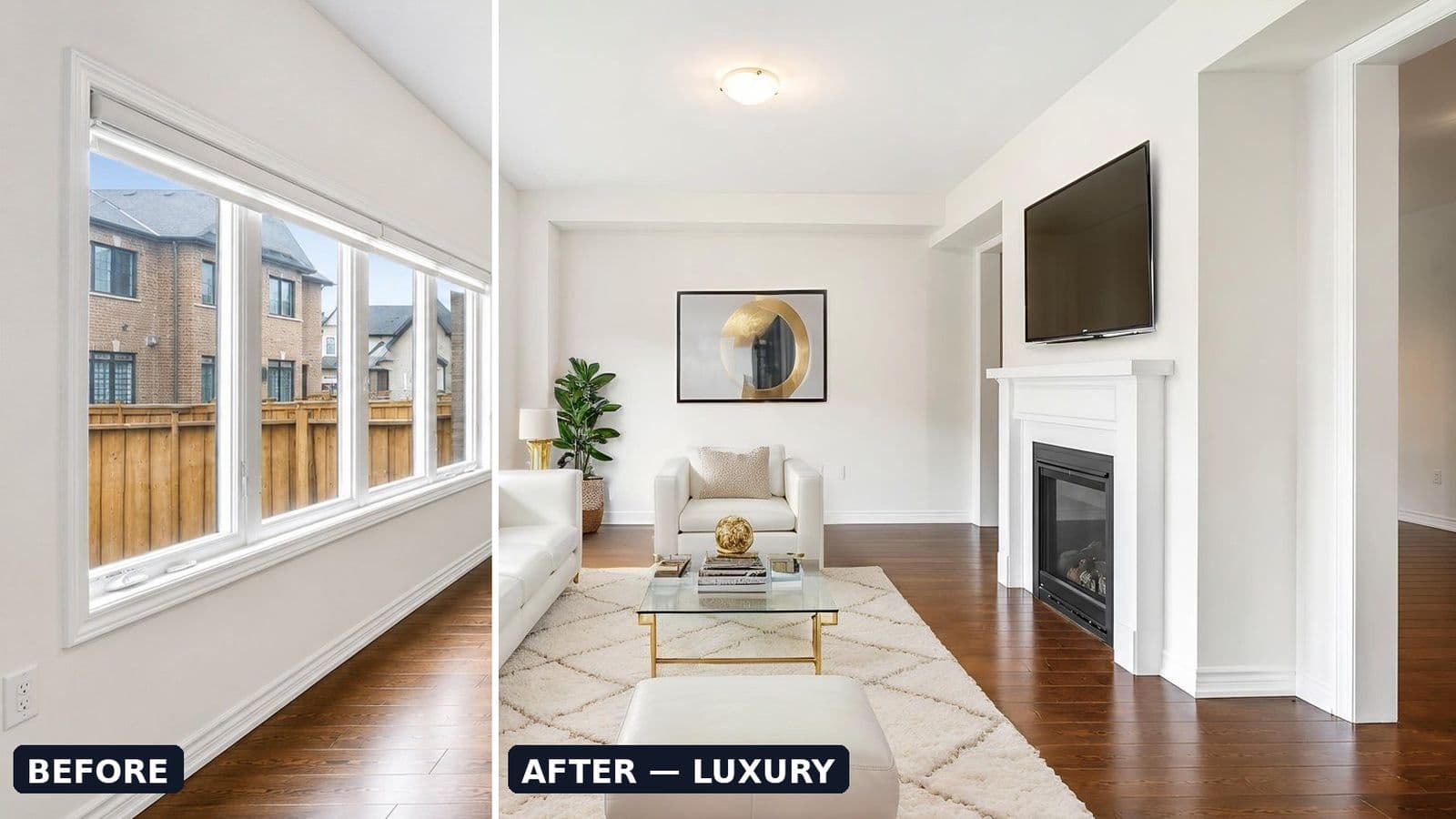
Written by a working real estate agent who has stood in plenty of empty living rooms with buyers who saw furnished photos online.
The problem nobody talks about
Virtual staging gets buyers in the door — that's the point, and it works. But there's a failure mode: a buyer falls in love with the photos, drives across town, walks into a bare, echoing room, and feels tricked. A buyer who feels tricked doesn't make offers. Sometimes they complain to the board.
The fix isn't to stop staging. It's to stage in a way that sets expectations instead of breaking them. Here's the playbook.
Rule 1: Show the empty photo next to the staged one
This is the single highest-impact habit. For every staged image, keep the original unstaged photo in the listing. Buyers who see both before booking a showing arrive with accurate expectations — and they trust the listing more, because you showed them everything. Hiding the empty room is what creates the walk-in gap; showing it is what makes staging feel like a service.
Rule 2: Label loudly, disclose early
"Virtually Staged" on the image, and a disclosure line near the top of your remarks. Buyers don't punish disclosed staging — they punish discovering it on their own. The exact wording that satisfies MLS boards is in our disclosure guide.
Rule 3: Stage the possibility, not a fantasy
Staging should answer "what would my life look like here?" — a sofa where a sofa fits, a desk in the nook that actually takes a desk. The moment staging shows a lifestyle the room can't deliver — oversized furniture, invented views, rooms that read bigger — you've traded a showing for a complaint. If you're not sure a render passes, our piece on why some AI staging looks fake has the 30-second checklist.
Rule 4: Never edit the things buyers verify in person
Furniture is an overlay; the room is the product. Never remove defects, never alter finishes, never change what's physically there. A buyer can't be disappointed that the sofa from the photo is missing — they understood it was staging. They will absolutely be angry that the floor stain from real life was missing from the photos.
Rule 5: Use the staging at the showing, not just before it
A trick experienced agents use: print the staged photo (or pull it up on a tablet) and leave it in the empty room it depicts. The buyer stands in the bare space, sees the staged version of exactly where they're standing, and the imagination gap closes on the spot. The staging keeps working at the moment that matters most — when they're deciding how the space would live.
Why this works
Buyers don't actually want untouched photos — vacant rooms photograph small, cold, and confusing. Buyers want help imagining the home, plus the confidence that nothing real was hidden. Staged photo, empty photo, clear label, accurate room: that combination gets you the click and the trust.
Every VirtuallyStage render is built to be published this way — MLS-compliant, 4K, with up to 20 staged designs per photo so you can match the staging to the buyer your listing will attract. Try it on your next vacant listing.
Stage your next listing today
$35 for 8 photos — a full listing — with up to 20 versions of every photo and furniture removal on the same account. No subscription, and credits never expire.