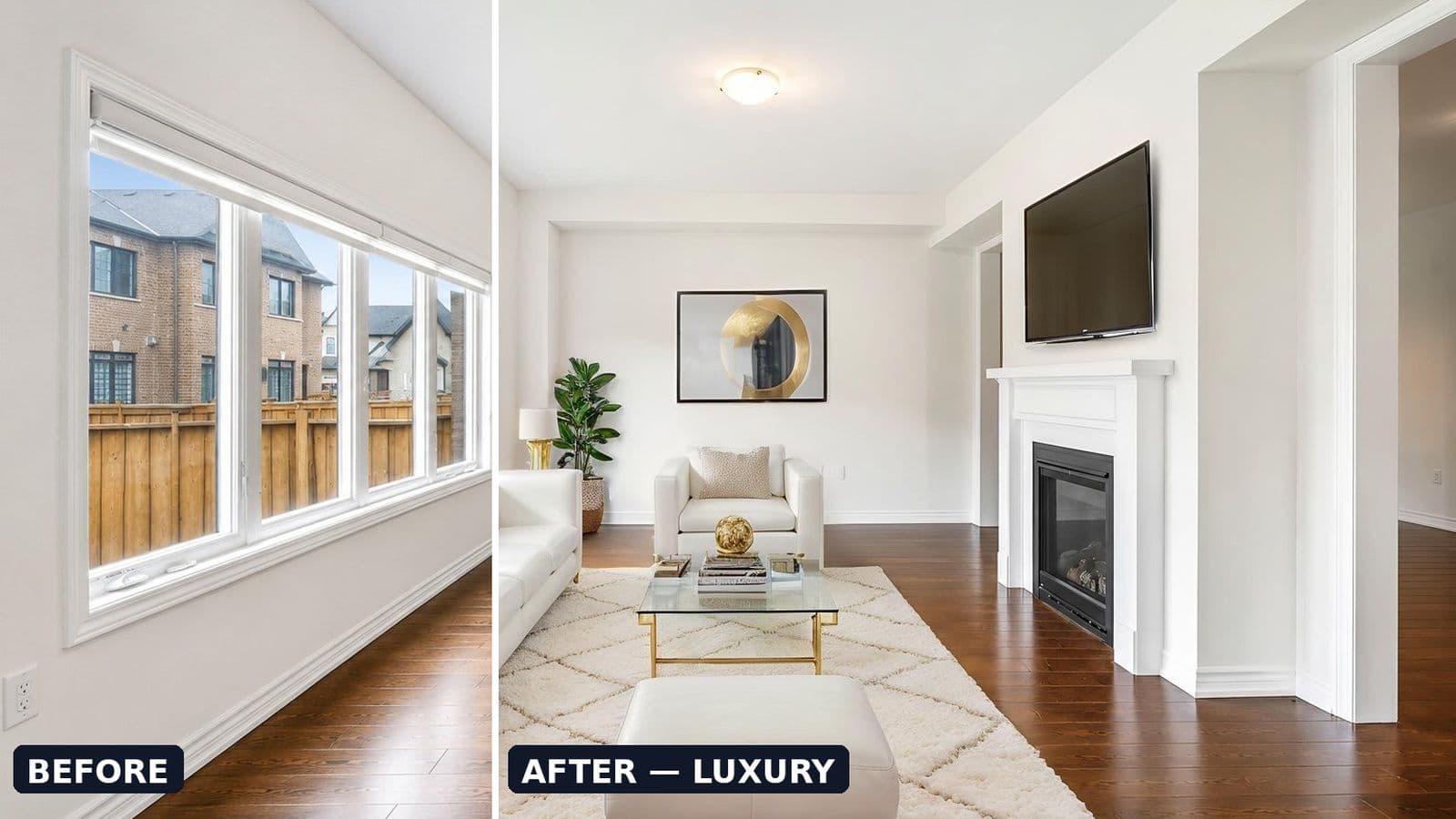
Why it works — the part that isn't a statistic
You don't actually need the numbers to see the logic.
Buyers shop with their thumbs. They scroll dozens of listings. An empty room is easy to skip — it's hard to picture, it looks small, it feels unloved. A furnished room stops the scroll.
Empty rooms lie about size. Counterintuitive, but true: with no furniture for scale, buyers routinely underestimate how big a room is. Staging gives the eye a reference.
The first showing happens online. By the time someone books a tour, the photos already sold them on coming. Bad photos mean the tour never happens.
Virtual staging is just the cheapest way to win that first, online showing — for a few dollars a photo instead of thousands for physical furniture.
Virtual vs physical staging, briefly
Physical staging works, but it costs $1,500–$5,000+ per property and takes days to set up. Virtual staging gets you the online engagement — which is where the buying decision starts — for a few dollars a photo, in minutes.
For a vacant listing where the goal is stop the scroll and get the showing, virtual staging captures most of the benefit at a tiny fraction of the cost. (Full cost breakdown on the comparison page.)
When it won't help
Straight talk:
- A listing with great natural light and a clean, furnished interior may not need it.
- Staging that oversells — fake finishes, unrealistic furniture — backfires at the showing and can cost you the deal.
- Luxury listings may warrant physical staging or human-edited photography where the imagery is the whole campaign.
Virtual staging is a tool for the vacant or sparse listing that photographs cold. Used there, it's one of the highest-return things you can do to a listing.
FAQ
Does virtual staging really sell homes faster?
Staged listings reliably get more online engagement — clicks, saves, showing requests — and tend to sell faster than empty ones, because buyers decide from photos first. Specific "X% faster" figures vary by study; cite the primary source.
Is virtual staging worth the money?
For a vacant listing, almost always. At a few dollars a photo versus thousands for physical staging, even a small effect on time-on-market or price more than pays for it.
How much does virtual staging cost?
Roughly $0.50–$7 per photo for AI tools, $10–$30+ for human-edited. VirtuallyStage is $35 for 8 photos with no subscription.
Does virtual staging add to the sale price?
Staging is generally associated with stronger offers, though specific figures vary by study and market. The reliable, provable benefit is more online engagement and faster showings.
Stage the vacant listing
VirtuallyStage furnishes empty rooms in about 15 seconds so your listing stops the scroll. $35 for 8 photos, no subscription, credits never expire.
Stage your first listing →
Sources