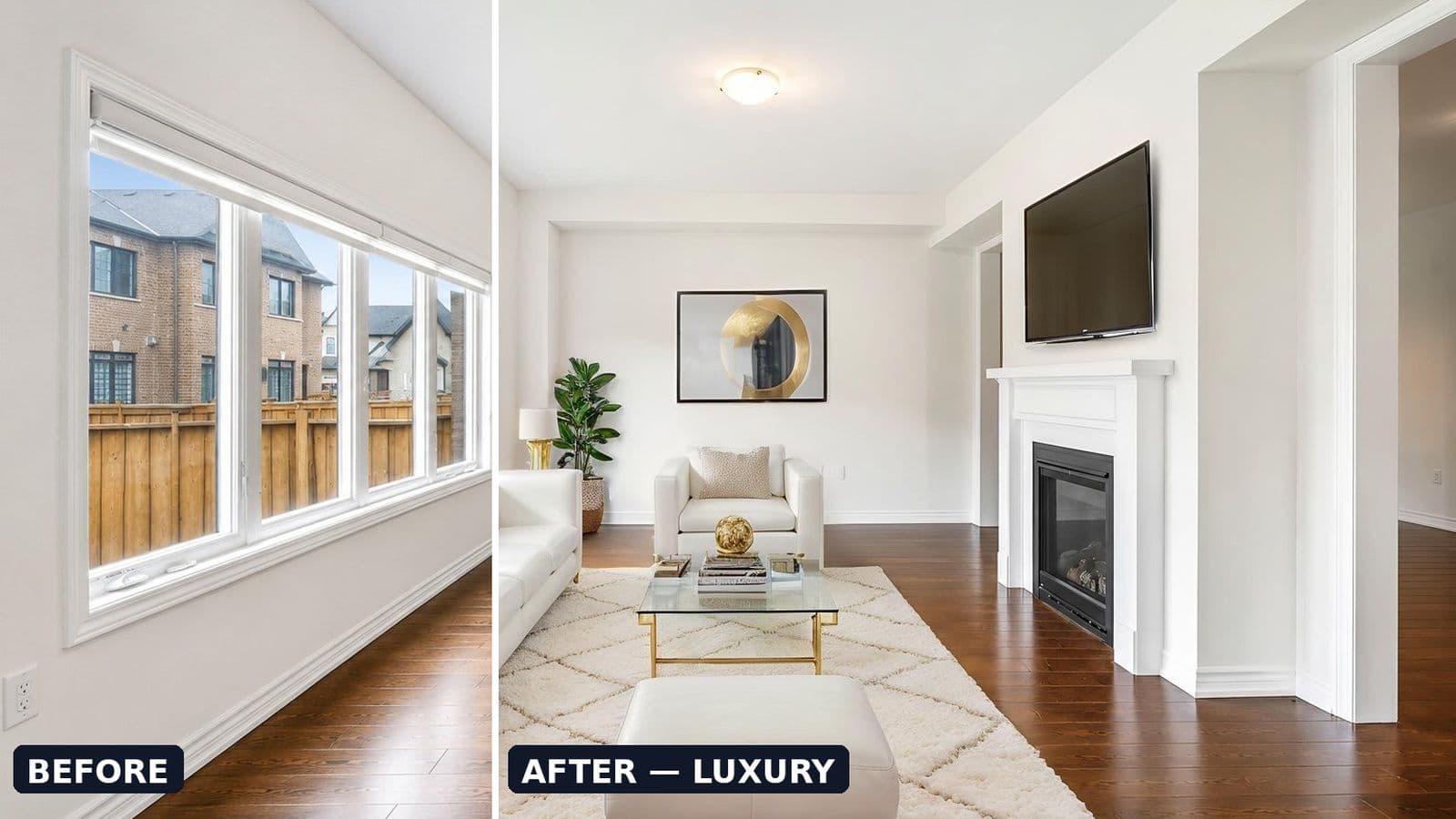
What buyers are really reacting to
Buyers aren't naive. In 2026, most know listing photos are edited. What they can't forgive is a gap between the photo and reality that changes their decision:
- A room that's dramatically smaller than it looked.
- A feature that was in the photo and isn't in the house.
- A defect the photos hid.
None of those come from adding a sofa to an empty room. All of them come from staging that pretends the property is something it isn't.
How to stage so buyers stay happy
1. Disclose it. Label the image, note it in the remarks. A buyer who knows it's staged can't feel tricked by it. 2. Furnish, don't renovate. Add furniture and décor. Don't add features or hide flaws. 3. Keep furniture realistic. A room styled like a design magazine sets a bar the empty space can't meet. Aim for "a real family lives here," not "photo shoot." 4. Match the market. Stage a starter home like a starter home. Overstyling reads as fake. 5. Show one empty photo too. Let them see the real room. It builds trust and it's required in some states anyway.
Do these and the showing confirms the photos instead of contradicting them.
Why "looks fake" is really "does too much"
When agents say AI staging "looks fake," it's usually not the furniture rendering — 2026 AI furniture is convincing. It's that the tool did too much: over-brightened the room into a different room, added finishes, styled it beyond what's plausible.
The fix isn't a fancier tool. It's restraint. Furnish the real room, plausibly, and disclose it. That's staging buyers trust.
FAQ
Will buyers be disappointed when they see the empty room?
Not if the staging was straight and disclosed. They know it's staged, they expected an empty room, and the space matches — same room, minus furniture. Disappointment comes from staging that changed the property, not from staging that furnished it.
Does virtual staging trick buyers?
It shouldn't, and it doesn't need to. Disclosed, realistic staging helps buyers picture a space — it doesn't deceive them. Staging that hides defects or invents features does deceive, and that's what erodes trust.
Why does some virtual staging look fake?
Usually because the tool changed too much — over-editing the room, adding finishes, or unrealistic styling. Staging that only adds plausible furniture to the real room reads as real.
Should I show an empty photo alongside the staged one?
Yes. It builds trust, and several MLS boards now require it in the listing — CRMLS, ARMLS, Canopy and NorthstarMLS among them (the board-by-board list).
Straight staging, by design
VirtuallyStage furnishes the real room and leaves the property alone — so the showing confirms the photos. $35 for 8 photos, no subscription.
Stage a listing →