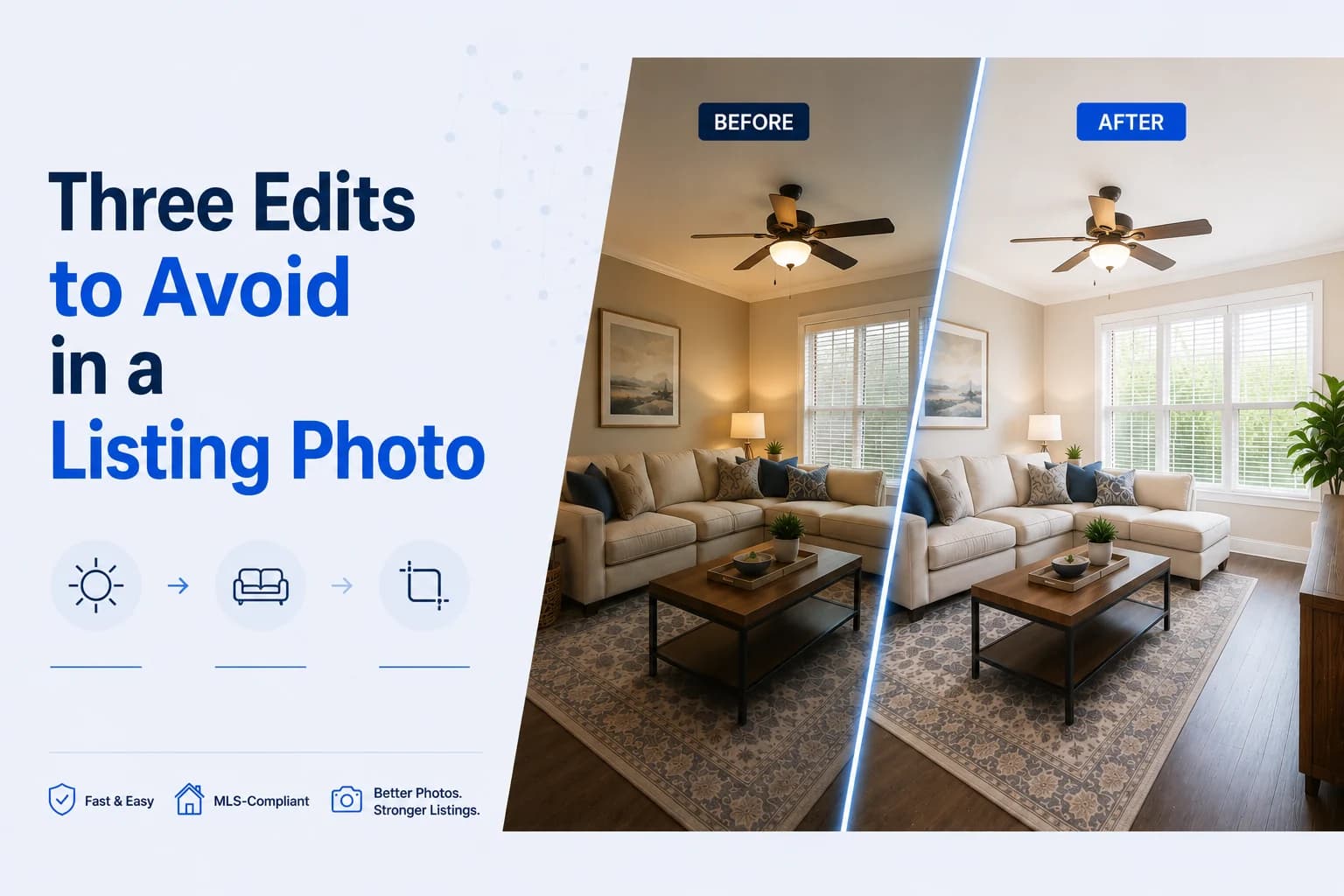
I stage my own listings, and I built the tool I use to do it. That second part means I have spent more hours than is probably healthy looking at what these models actually do to a photograph — not the finished render, the part underneath.
There are three edits I won't make.
Two of them aren't against any rule in Ontario. I checked, properly, in the actual rulebook. I still won't make them, and it isn't really about compliance. It's about the twenty seconds after the front door opens.
1. Anything that was covering something
This is the one that gets people, and it's the one almost nobody understands about AI removal.
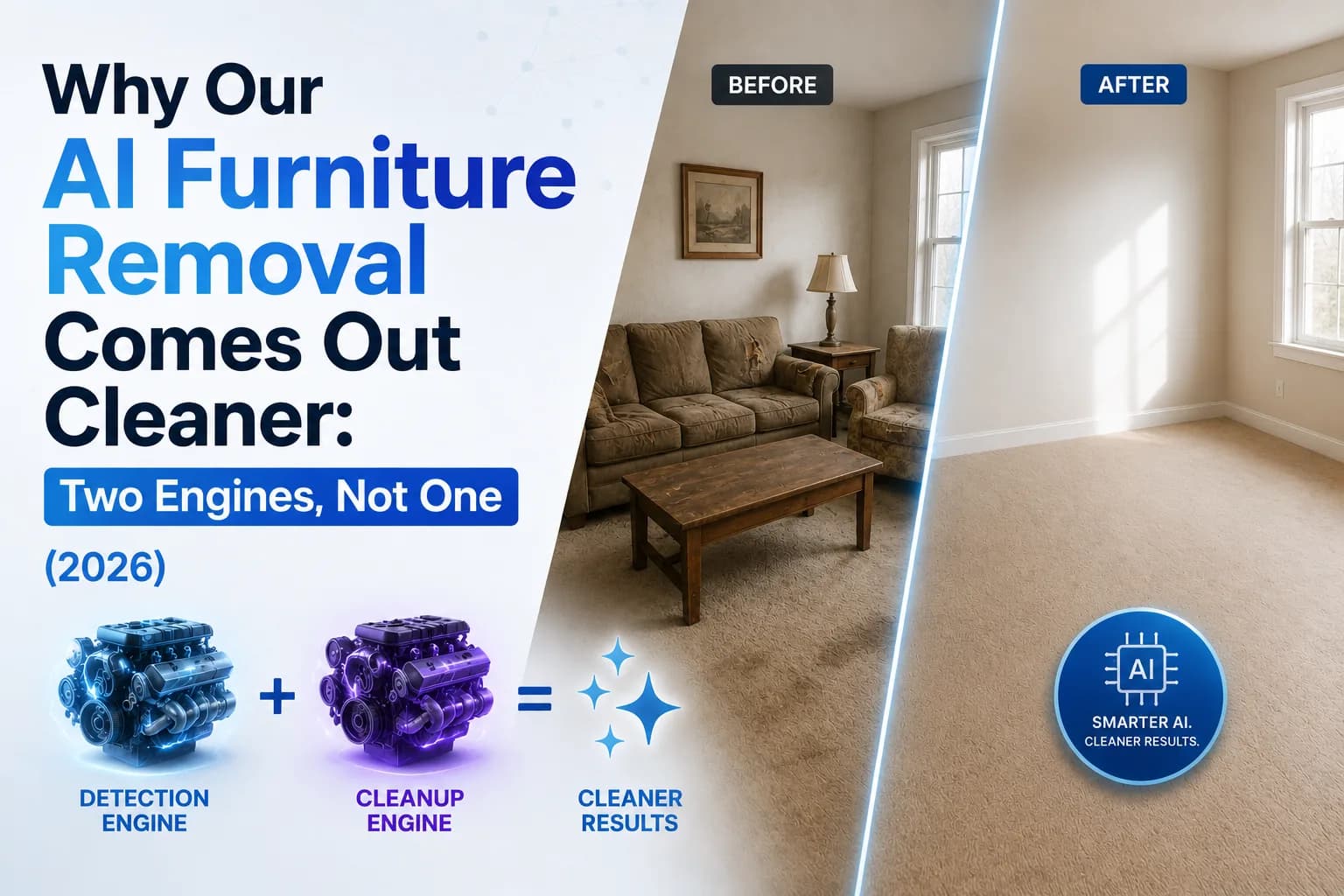
When you take out a rug, the tool doesn't cut a hole in the photo. It has to put something back. What it puts back is a guess — a clean, confident, well-lit guess about what the floor looks like underneath.
If the floor under that rug is fine, the guess is right and nobody ever knows. That's most of the time.
But things end up on floors and against walls for a reason. A rug over a worn patch. A sofa in front of a scuffed baseboard. A picture over a repair. Remove the object and the model doesn't reproduce what's there — it paints in what should be there. Fresh floor. Clean wall.
The photo looks completely normal. That's the problem with it.
Ontario's rule, for what it's worth, is PropTx 5.01(a). It doesn't ban AI images. It bans images that "do not accurately depict the listed real estate." That's the whole test, and it's a good one.
A sofa is not the real estate. The wall behind it is.
So the question I ask isn't did I remove something. It's did the tool invent something.
2. Anything outside the window, or on the roofline
Power lines. The neighbour's roof. A utility pole. Whatever's across the street.
BC's regulator put this better than I could, and it's the clearest sentence any Canadian regulator has written on the subject:
"While editing out such items as a garbage can or an automobile parked in a driveway would be acceptable, removing nearby power lines or changing any physical characteristic of a property such that it results in a misrepresentation would not be acceptable."
A garbage can is somebody's garbage can. Power lines are part of what you're buying.
That's guidance in BC and persuasive everywhere else, but I'd hold this line whether or not anyone had written it down. A buyer who pulls up and sees a hydro pole that wasn't in the photos has decided something about the rest of the listing before they're out of the car. You don't get that back.
3. Anything that isn't furniture
The test I use is one every agent already knows, and it comes from the agreement of purchase and sale: chattels versus fixtures.
Chattels leave with the seller. Sofa, bed, TV, rugs, toys, the car in the driveway. Not part of the property.
Fixtures stay. Walls, flooring, built-ins, cabinets, light fixtures, windows.
If it would go on Schedule A, it can come out of the photo. If it stays with the house, it stays in the photo.
That single test has never let me down, and it lines up with every rule I have read across the country. Alberta's MLS rules define virtual staging as "adding virtual unattached goods (chattels)" — unattached is doing all the work in that sentence. Same line, different words.
The awkward one is a wall-mounted TV. Technically it comes off the wall with the seller. But the mounting holes don't, and holes in a wall are a wall condition. I leave it.
What I actually do
I remove the furniture and the clutter, and then I go and look at the spot where the thing used to be.
That's the whole quality check. It takes two seconds and it's the only one that matters. If the patch of floor or wall the tool rebuilt doesn't match the rest of the room, the photo doesn't get used.
Not because someone will catch me. Because a buyer standing in that room will feel that something is off, won't be able to say what, and will trust the whole listing slightly less for the rest of the showing.
The part that took me longest to work out
For a while I was thinking about this backwards. I kept asking what I was allowed to take out.
That's not where the risk is.
The risk in AI editing isn't what you take out. It's what the model paints back in.
Removing a sofa changes nothing about a house. Inventing the floor underneath it changes everything — and it does it quietly, in a photo that looks completely fine.
I list in Ontario and these are my own rules, not legal advice. The provincial rules genuinely differ — Ontario requires no disclosure at all, Alberta and PEI require it in the public remarks, and Quebec prescribes the exact wording. If you want the rule for where you list, I keep them all here: virtual staging rules by province.