Can you get virtual staging without a monthly subscription?
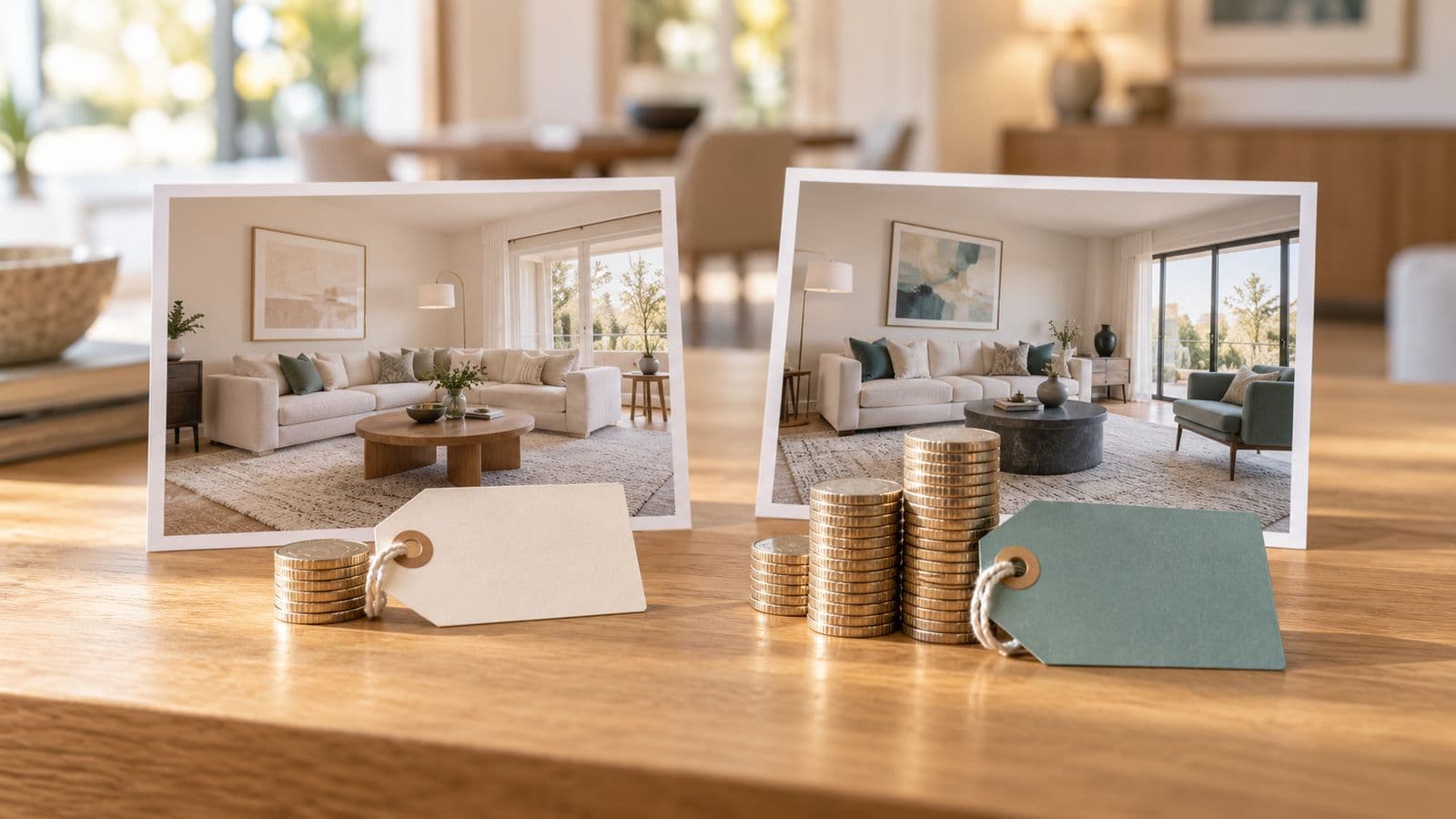
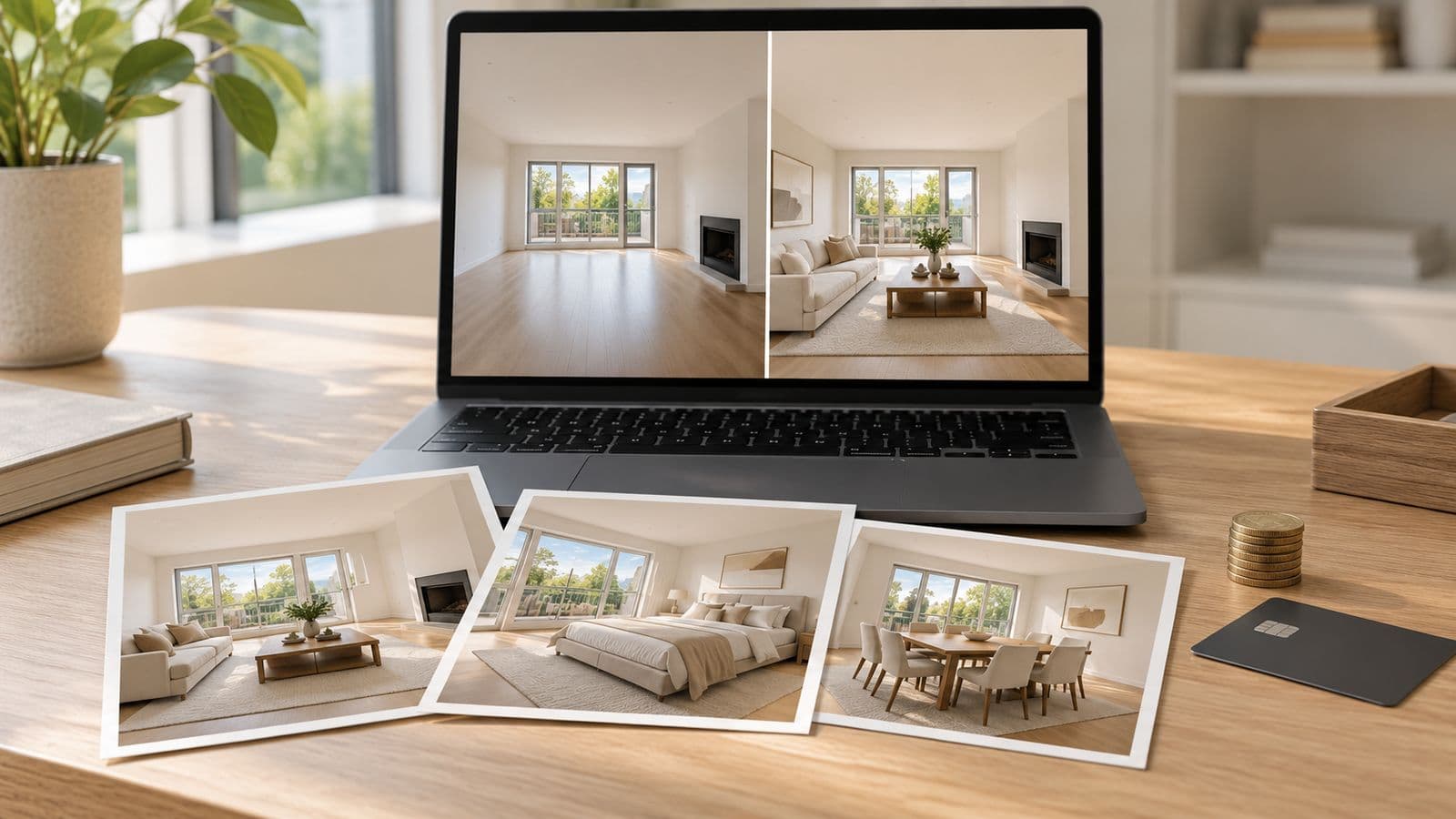
Yes. VirtuallyStage sells staging credits outright — $35 for 8 photos, one listing, no monthly fee, and the credits never expire. Most AI virtual staging tools run on a subscription where unused photos reset every month. If you list one or two properties a quarter, you end up paying for months you never used.
That's the entire difference. Everything below is the math.
How virtual staging pricing actually works in 2026
There are three pricing models, and they suit three different agents.
1. Pay-per-listing (credits you own)
You buy credits once. They don't expire. You use them when a listing comes up.
VirtuallyStage:
| Package | Price | Photos | Per photo | Best for |
|---|---|---|---|---|
| Single-listing | $35 | 8 | $4.38 | One vacant property |
| Agent-pack | $99 | 30 | $3.30 | ~4 listings |
| Brokerage-pack | $249 | 80 | $3.11 | ~10+ listings |
| Volume packs | $399 / $599 / $999 | 140 / 225 / 400 | $2.85 / $2.66 / $2.50 | Teams and brokerages |
Credits never expire. 20 staged designs per photo, 4K renders, delivery in about 15 seconds, MLS-compliant, full commercial license. Canadian agents see and pay Canadian prices — $39 CAD for 8 photos, $109 CAD for 30, $289 CAD for 80 — no subscription, credits never expire.
2. Monthly subscription (credits that reset)
You pay every month. Unused photos disappear at the end of the billing cycle.
Virtual Staging AI (billed yearly):
| Plan | Per month | Photos/month | Per photo | Yearly total |
|---|---|---|---|---|
| Basic | $16 | 6 | $2.67 | $192 |
| Standard | $19 | 20 | $0.95 | $228 |
| Professional | $39 | 60 | $0.65 | $468 |
| Enterprise | $79 | 150 | $0.53 | $948 |
3. Per-image, human-edited
A designer does the work. Higher realism, slower turnaround, much higher price.
BoxBrownie: $30 per image for virtual staging. Item removal is a separate $10. ApplyDesign: credits at $7–$10 each; one auto-staged 2D image costs 1.5 credits, so roughly $10.50–$15 per image.
This isn't about credits or who's cheapest. A buyer's first impression is the photos. If a room looks fake, they scroll past and never see anything else you wrote. You're paying for photos that look real, present the home at its best, and give buyers a reason to come see it — that is what sells it. — Ali Annabi, working real estate agent and founder