Written by a working real estate agent who uses AI removal and staging on real listings — not by a marketing department.
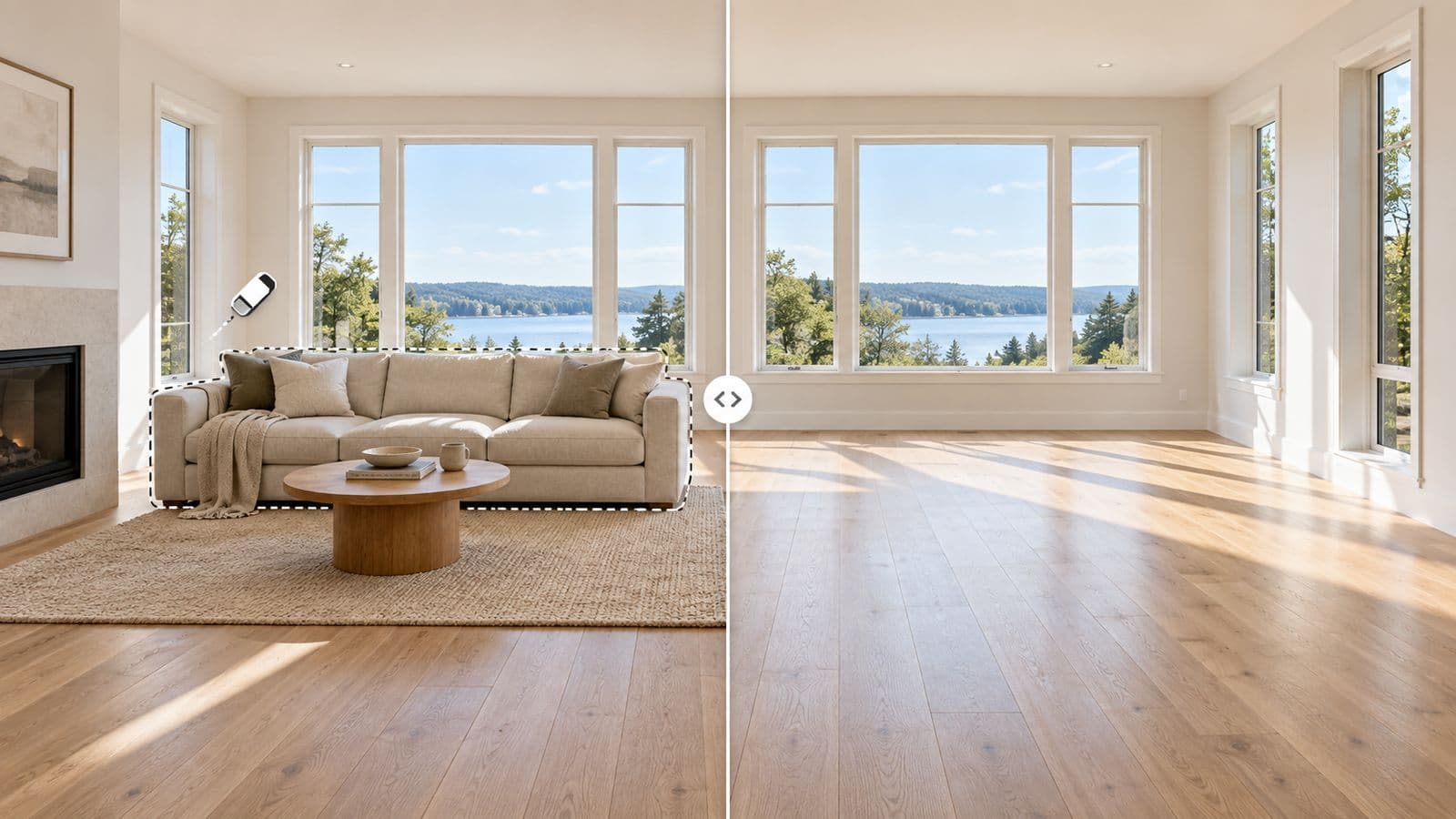
If you have ever stood in a cluttered living room wondering how to make it photograph well, you have faced the question every listing agent runs into: do you physically stage the space, or clear it and handle the visuals digitally? Here is a straight comparison of AI furniture removal and traditional staging on the two things that matter most — cost and speed — plus when each one actually makes sense.
Turnaround: days vs. seconds
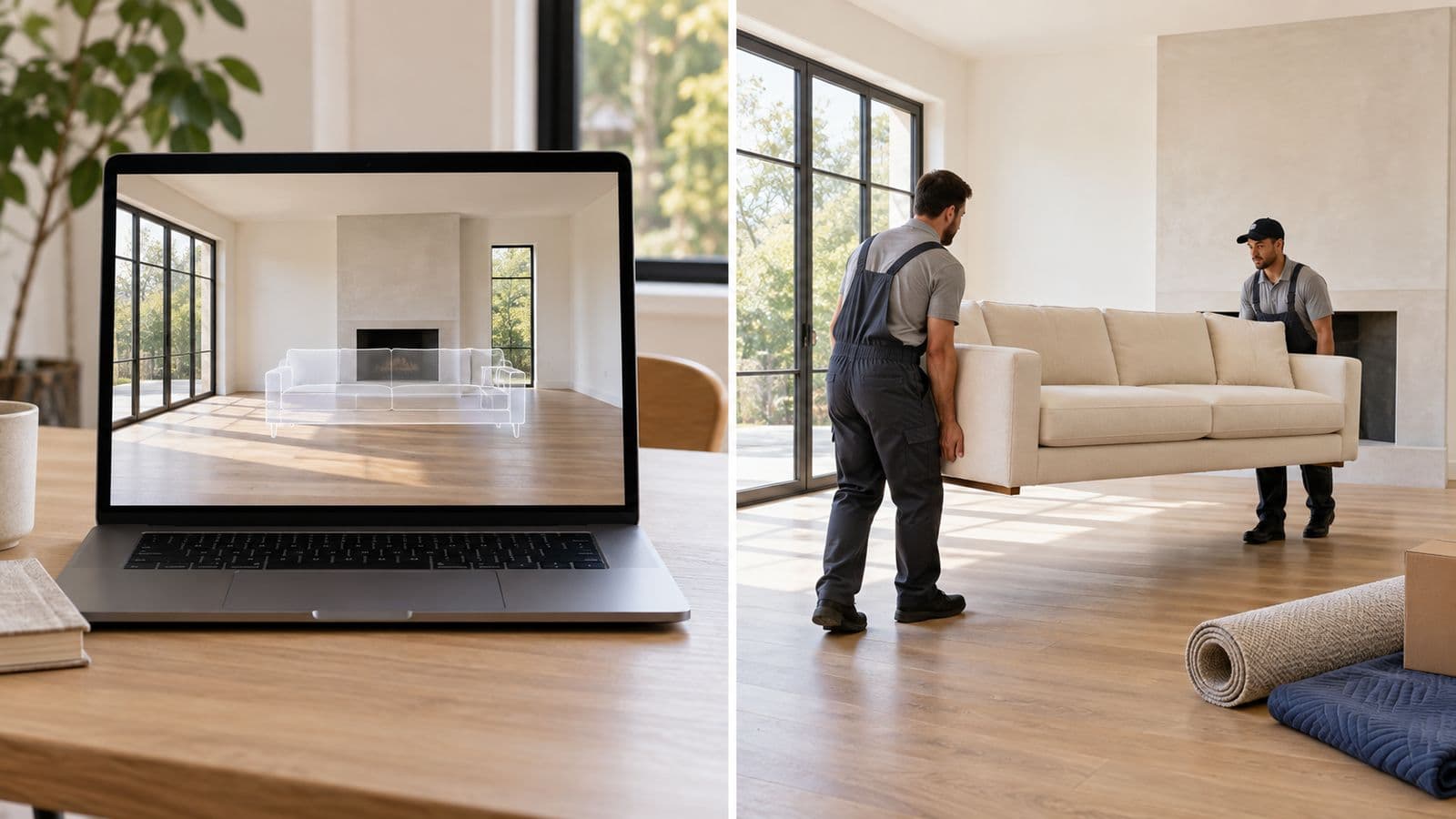
Traditional staging is a scheduling exercise. You book the stager, wait for availability, coordinate access, wait for furniture to be delivered and arranged, then finally get your photographer in. Realistically that is several days to a couple of weeks between "let's stage it" and "photos are live."
AI furniture removal collapses that timeline. You upload the photo you already have and get a cleared, listing-ready image back in about 15 seconds. If you decide the room should be furnished, you can stage it digitally in the same sitting. The whole thing happens between showings, not between weeks.
Cost: per-room investment vs. per-photo
Traditional staging is priced as a service — commonly hundreds to a few thousand dollars for a home, depending on the market, the number of rooms, and how long the furniture stays. It can absolutely be worth it on the right listing. But it is a real line item, and it scales with every room and every month on market.
AI furniture removal and virtual staging is priced per photo. With VirtuallyStage that is a pay-per-listing model — $35 for 8 photos, with no subscription and credits that never expire — which works out to about $4.38 per photo, and less on larger packs. For a lot of listings, that difference is the deciding factor. See the full cost-per-photo breakdown.