Nova Scotia Real Estate Commission · initial source review 29 July 2026 · page updated 17 October 2026
Virtual staging rules in Nova Scotia
Source dates are shown below. We have not confirmed every current member-only MLS rule; verification gaps are not exemptions.
No staging rule. What Nova Scotia does have is the clearest published test for when an ad crosses the line — and it's a test a virtually staged photo could plausibly fail, because it turns on the overall impression rather than on whether any specific words were untrue.
What you're actually bound by
Commission By-law 708, which prohibits advertising that is false, inaccurate, or reasonably capable of misleading. Worth knowing: the Real Estate Trading Act itself has no general false-advertising provision — Nova Scotia delegates the whole thing to the By-law.
Practical editing guidance for Nova Scotia
Commission By-law 708 — advertising must not be false, inaccurate, or reasonably capable of misleading, judged on the overall impression the ad gives.
Workflow and checks
- ✓Adding furniture, rugs, art, lamps and plants to the room as photographed
- ✓Showing how a vacant or sparsely furnished room could be laid out
- ✓Removing movable furniture only after checking the MLS policy and verifying the surfaces revealed; do not infer permission solely because an object is a chattel.
- ✓Our recommendation: disclose the edit using your MLS’s accepted format. The cited general advertising provision does not specify a staging label, but other rules may apply.
Restrictions and edits to avoid
- ✕Moving or removing walls, or changing the size or shape of a room
- ✕Adding windows, doors, fireplaces, built-ins or any fixture that is not there
- ✕Changing the flooring, wall colour, countertops, cabinets or finishes
- ✕Fixing the view, the neighbouring house, power lines or the lot
- ✕Painting over damage, stains, cracks or anything a buyer would call a defect
Stage within the rule
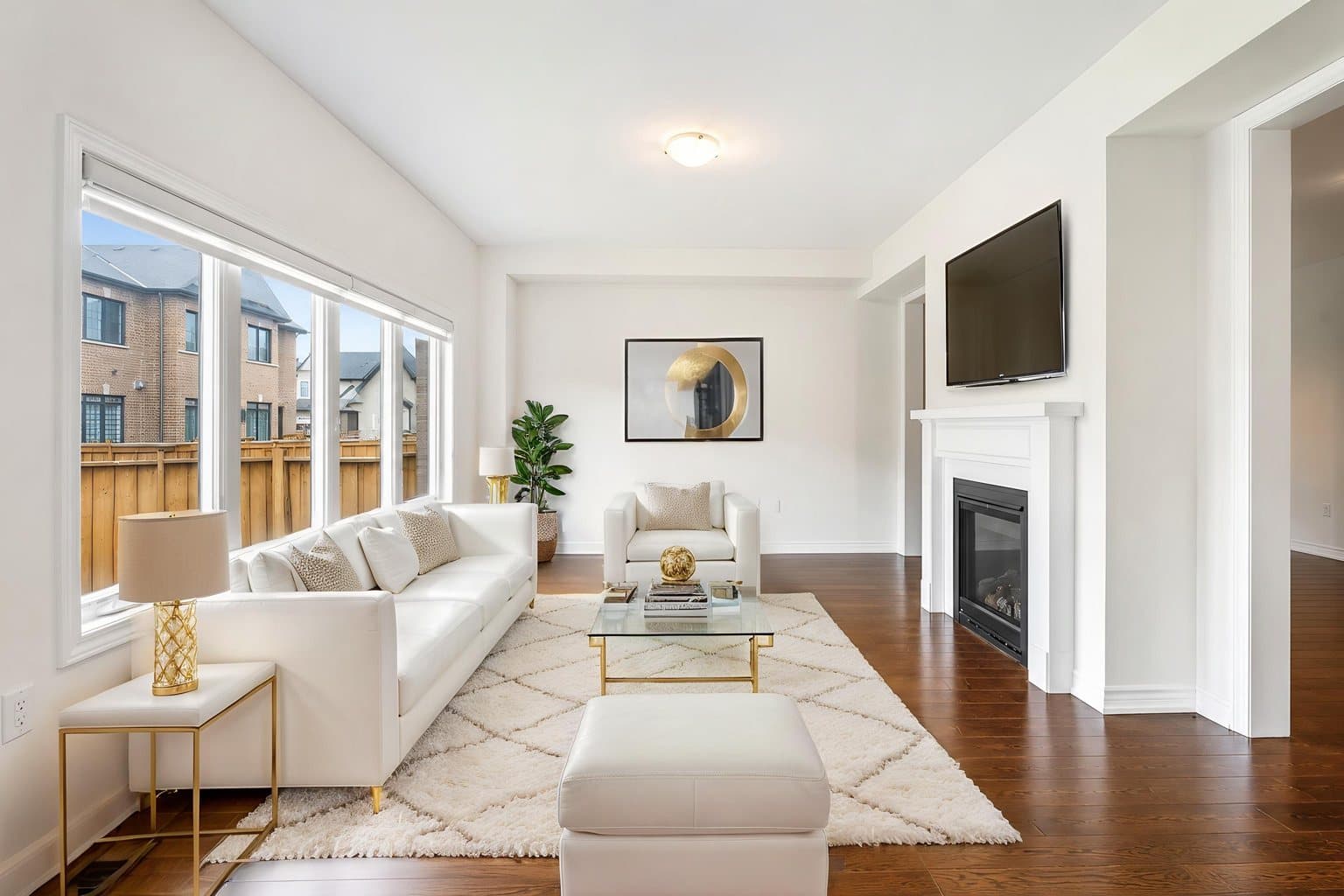
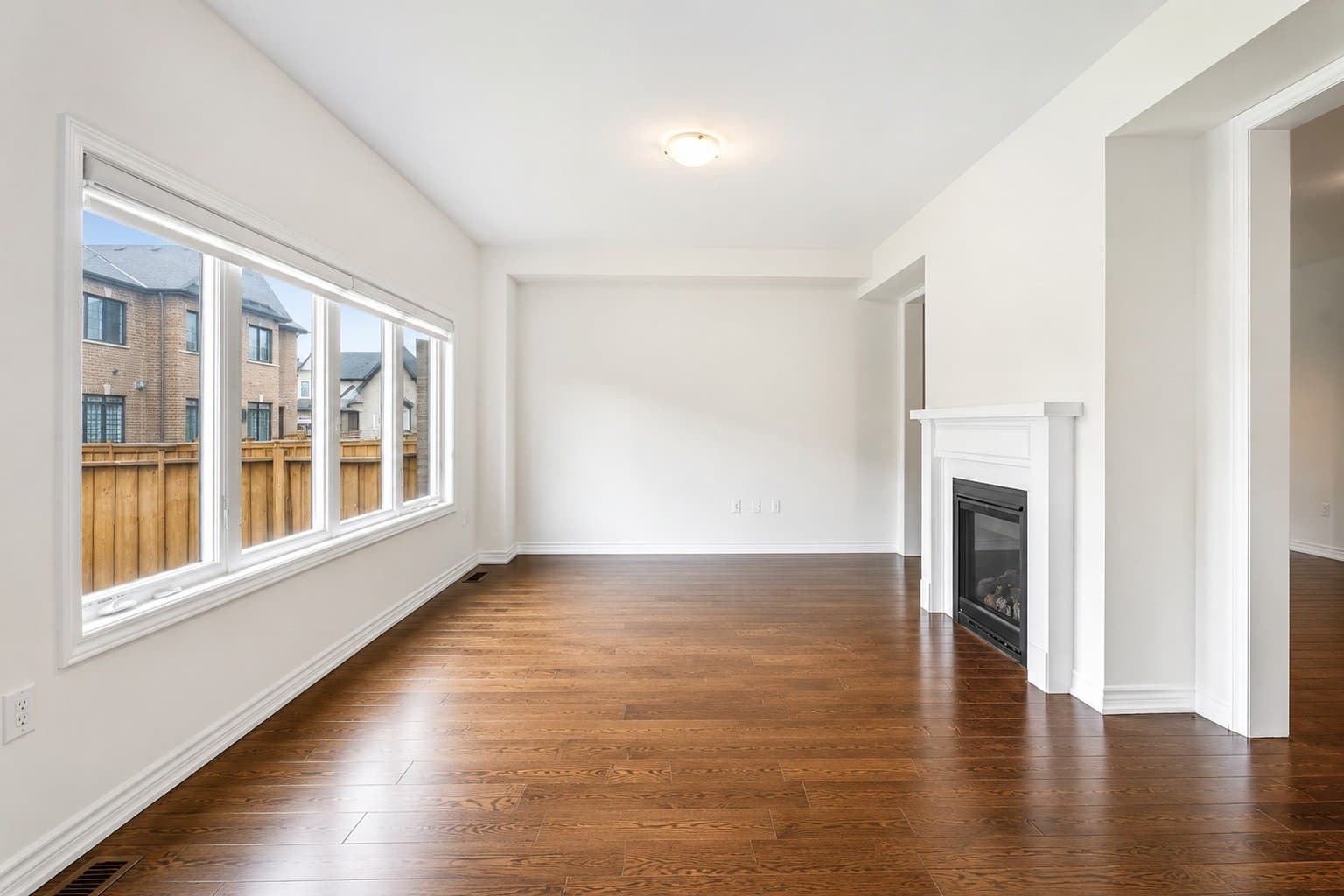
Drag the handle. The walls, window and floor are the ones in the photo — only the furniture was added.
VirtuallyStage furnishes the room in your photo and leaves the walls, windows, floor and fixtures exactly as photographed — the accuracy test every rule on this page comes down to. Furniture removal works the same way. $35 for 8 photos ($4.38 each), no subscription, about 15 seconds a photo.
The actual text
Quoted verbatim. Anything marked regulator guidance is the regulator's stated interpretation rather than a binding section.
The By-law standard
reasonably capable of misleading the recipient or intended recipient
NSREC Commission By-law 708(a), as quoted by NSREC · News Bulletin, 22 August 2024 · Read the source
You don't have to prove anyone was actually fooled
regulator guidanceAn advertisement may be considered misleading even if it is not demonstrated that a consumer was actually misled. It is only necessary to show that the advertisement is capable of misleading a reasonable consumer.
NSREC Disciplinary Newsletter · December 2013 · Read the source
What I couldn't verify
- · By-law 708's full verbatim text could not be retrieved — the Commission By-law document was not accessible. The wording above is NSREC's own quotation of its By-law in an official bulletin, not the By-law document itself. Confirm before relying on exact phrasing.
- · Nova Scotia Association of REALTORS® MLS rules are member-only.
These stay listed until they're closed. If you have access to a document above, I'd genuinely like a copy — get in touch.
Nova Scotia questions
How does Nova Scotia decide whether an ad is misleading?
On the overall impression, not just the literal words — and you do not have to prove anyone was actually fooled. NSREC states that an advertisement may be misleading "even if it is not demonstrated that a consumer was actually misled," and that it is enough to show the ad is capable of misleading a reasonable consumer. That is a standard a staged photo could plausibly fail even if every word in the listing is true.
Is the rule in the Act or the By-law?
The By-law. Nova Scotia's Real Estate Trading Act contains no general false-advertising provision at all — the entire duty is delegated to Commission By-law 708. Note that the By-law document itself could not be retrieved; the wording quoted here is NSREC's own quotation of it in an official bulletin.
Before you rely on this
This page is information, not legal advice. I'm a licensed REALTOR®, not a lawyer. Every rule below is quoted from a primary source and linked so you can read it yourself — and where a rule has not been verified, the gap is stated. Rules change, and board MLS rules aren't public, so confirm anything you're relying on with your own board or regulator before you act on it.
Citing this page:
VirtuallyStage, "Virtual Staging Rules in Nova Scotia" (initial source review 29 July 2026, content updated 17 October 2026; see source-specific review notes).
Researched by Ali Annabi, Licensed REALTOR®, Ontario.
https://www.virtuallystage.com/virtual-staging-laws/nova-scotia
Other jurisdictions
Where to go next
- Disclosure wording generator — copy-ready wording for Nova Scotia, and for every other province.
- Virtual staging in Nova Scotia: Halifax
- AI furniture removal — check removal-specific restrictions and inspect the surfaces revealed.
- Canadian virtual staging questions — the questions agents ask most, answered from the rules.
- Compare all 13 provinces and territories — side by side, with source editions and verification gaps.
This page is maintained by VirtuallyStage — AI virtual staging and furniture removal for real estate listings, built by a working realtor. We research these rules from the regulators and MLS rulebooks directly, and publish what we could not verify alongside what we could.